NEWS
STIMULATE contributes several papers to MICCAI 2026
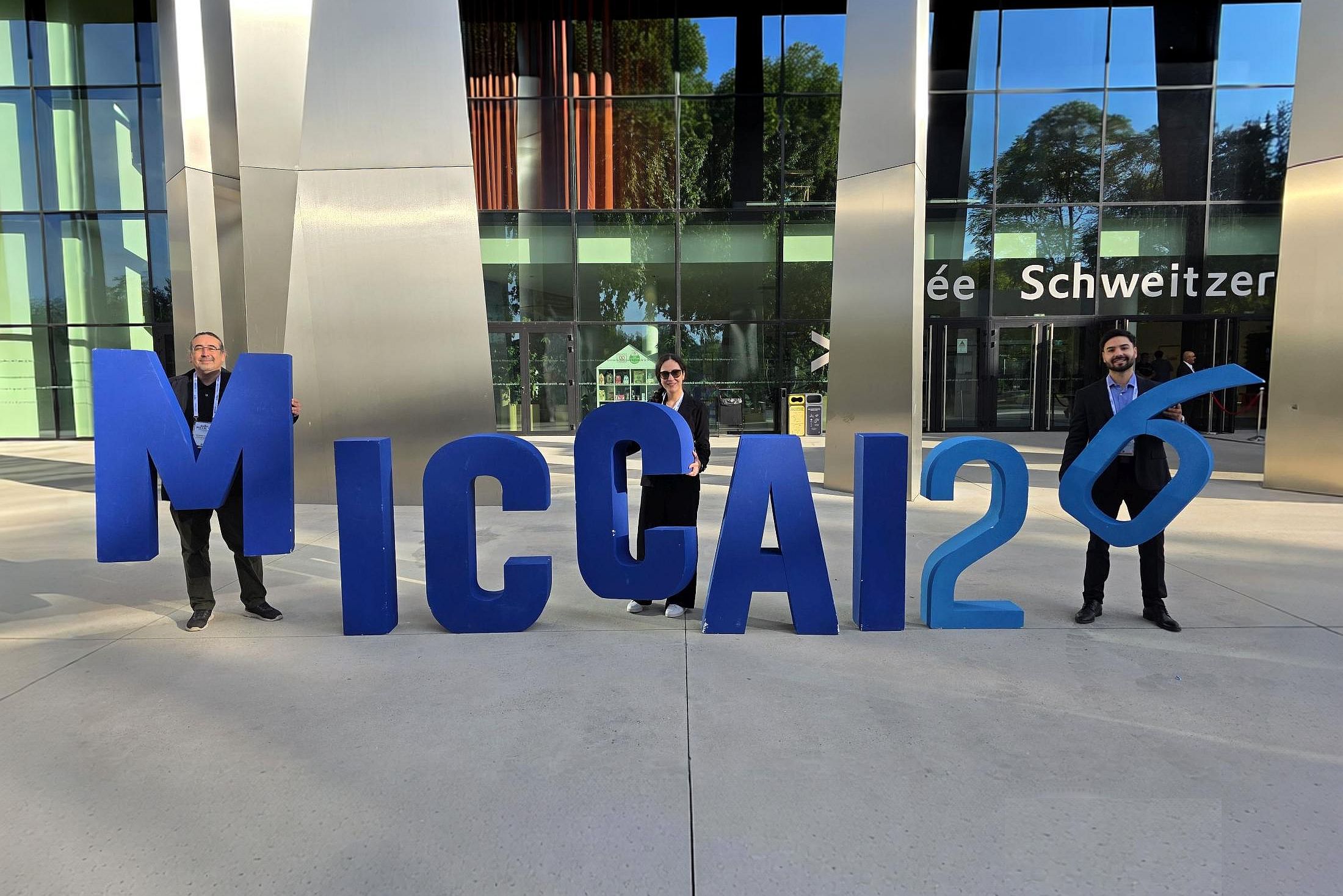
The Research Campus STIMULATE was represented at the prestigious MICCAI 2026 – International Conference on Medical Image Computing and Computer-Assisted Intervention – with several scientific papers. This internationally significant conference brings together researchers from the fields of medical imaging, artificial intelligence, computer vision and computer-assisted interventions, and provides an important platform for presenting new methods and technologies for medicine and discussing them with an international audience of experts.
The contributions from the STIMULATE community demonstrated the breadth of research topics on campus – ranging from AI-assisted medical image analysis and support for minimally invasive procedures to vibroacoustic techniques.
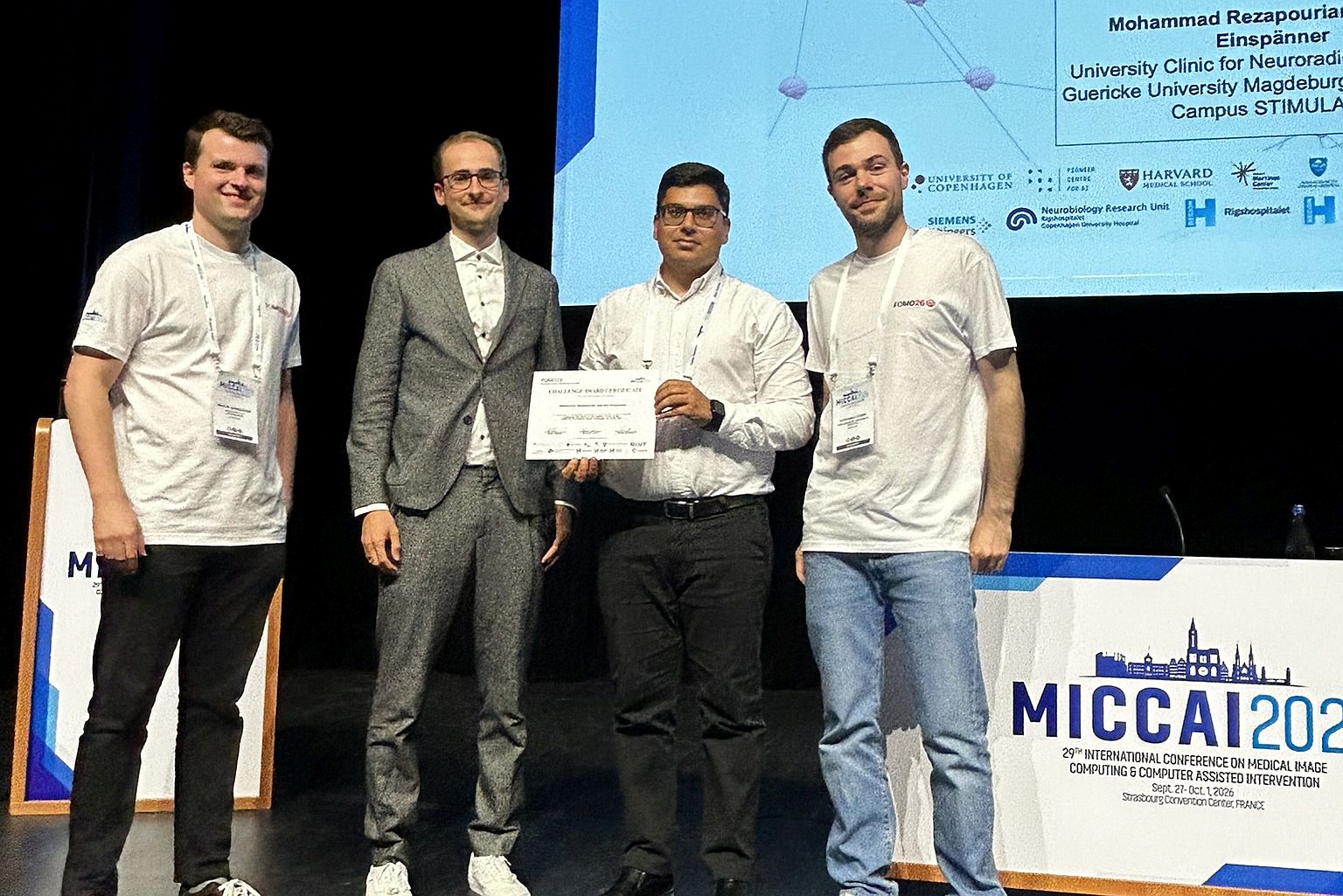
Mohammad Rezapourian and Eric Einspänner’s participation in the FOMO26 Challenge (Foundation Model Challenge for Brain MRI) was particularly successful. With their team ‘BrainAI’, they came second. The challenge examined the performance of foundation models for analysing brain MRI data and evaluated the models against seven clinically relevant tasks. The top three teams were invited to present their results at MICCAI.
As part of the conference, Rezapourian and Einspänner therefore gave a presentation entitled ‘Presentation of FOMO2026 results’. The work was carried out within the STIMULATE research group Clinical AI in Medical Imaging.
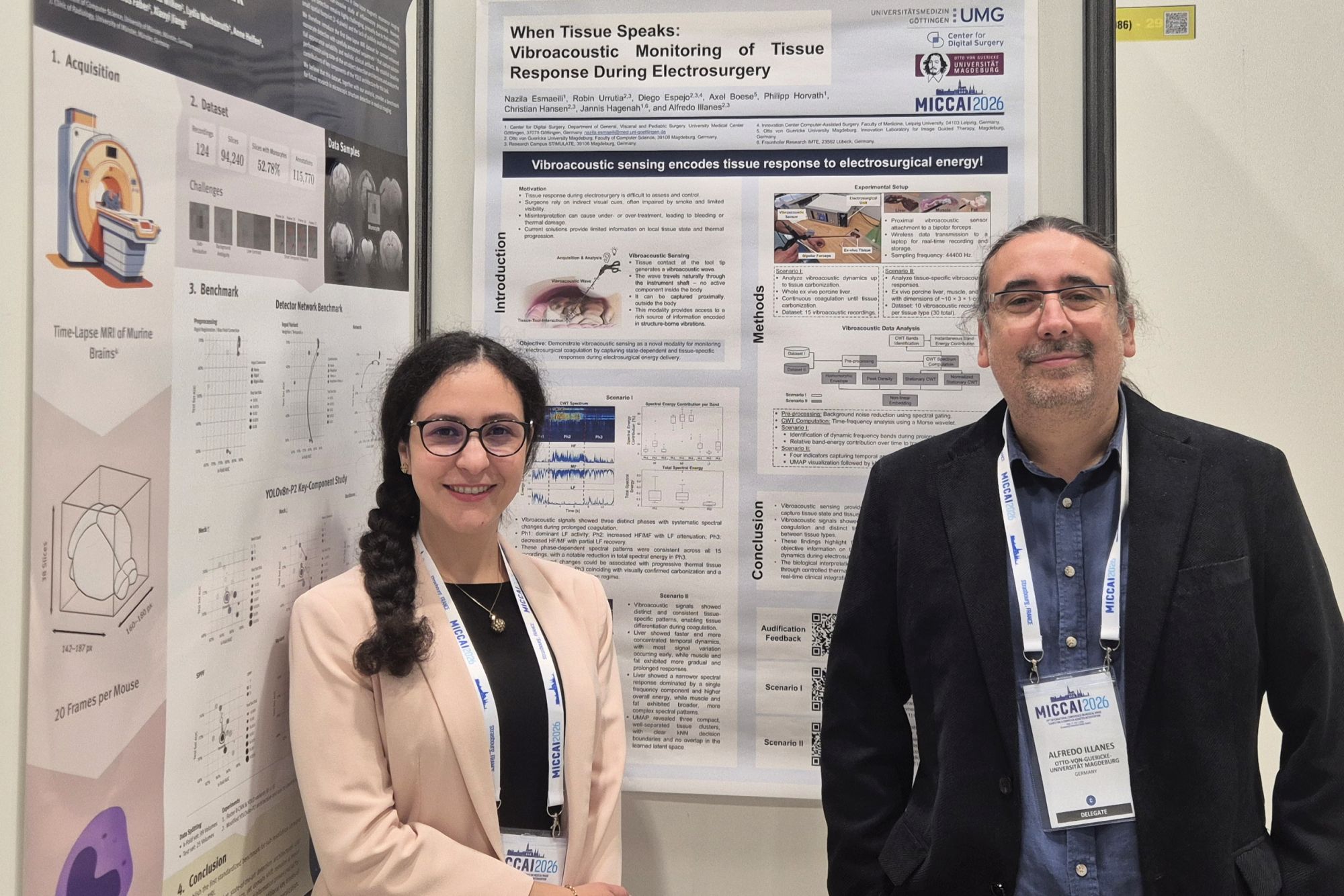
In addition, the Virtual and Augmented Reality Group at the Research Campus STIMULATE was represented by two further MICCAI papers. The focus was on the use of vibroacoustics and machine learning to support minimally invasive procedures. The paper “When Tissue Speaks: Vibroacoustic Monitoring of Tissue Response during Electrosurgery’ investigated how acoustic and vibroacoustic signals can be used to detect tissue response during electrosurgical procedures. The first author was Nazila Esmaeili.
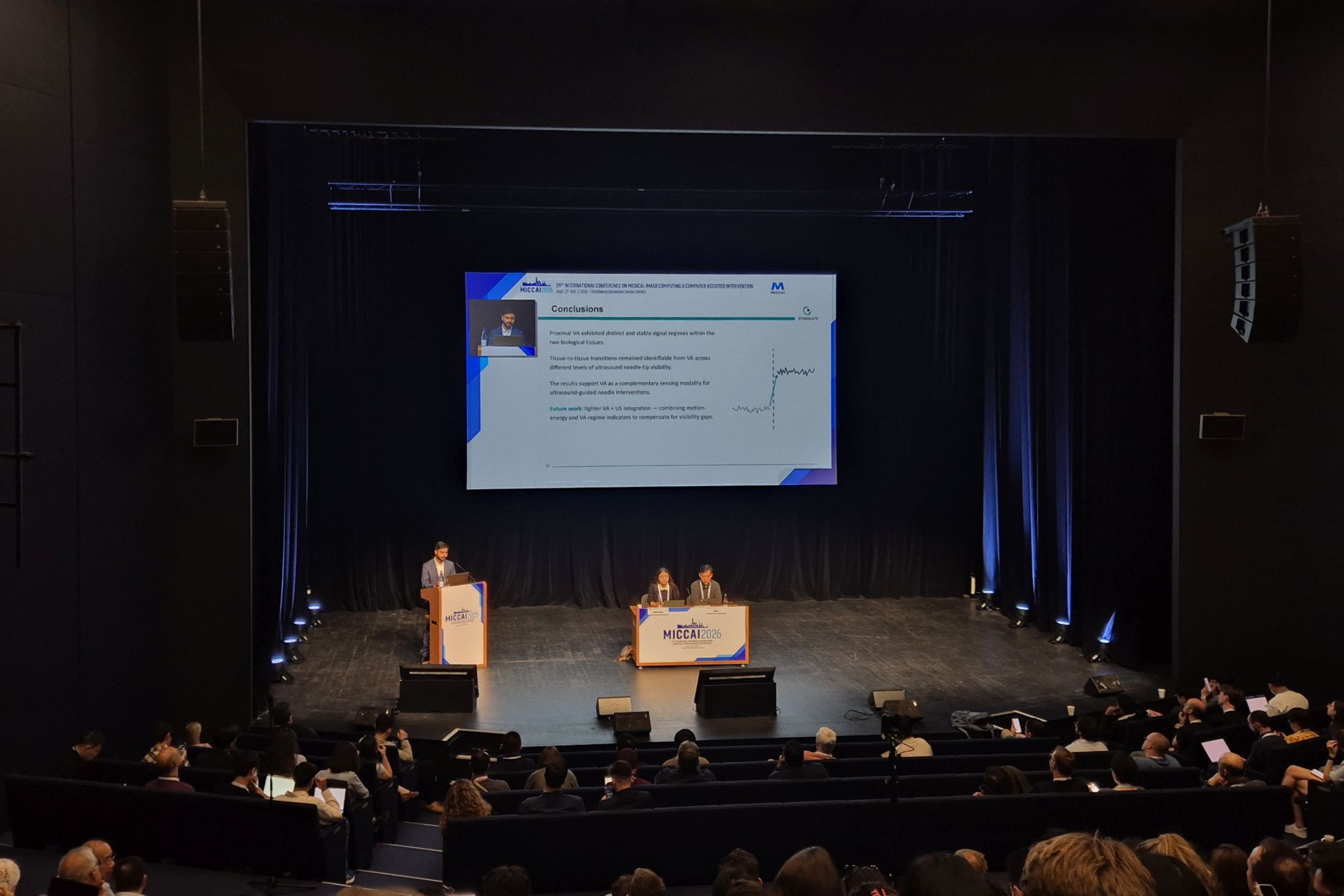
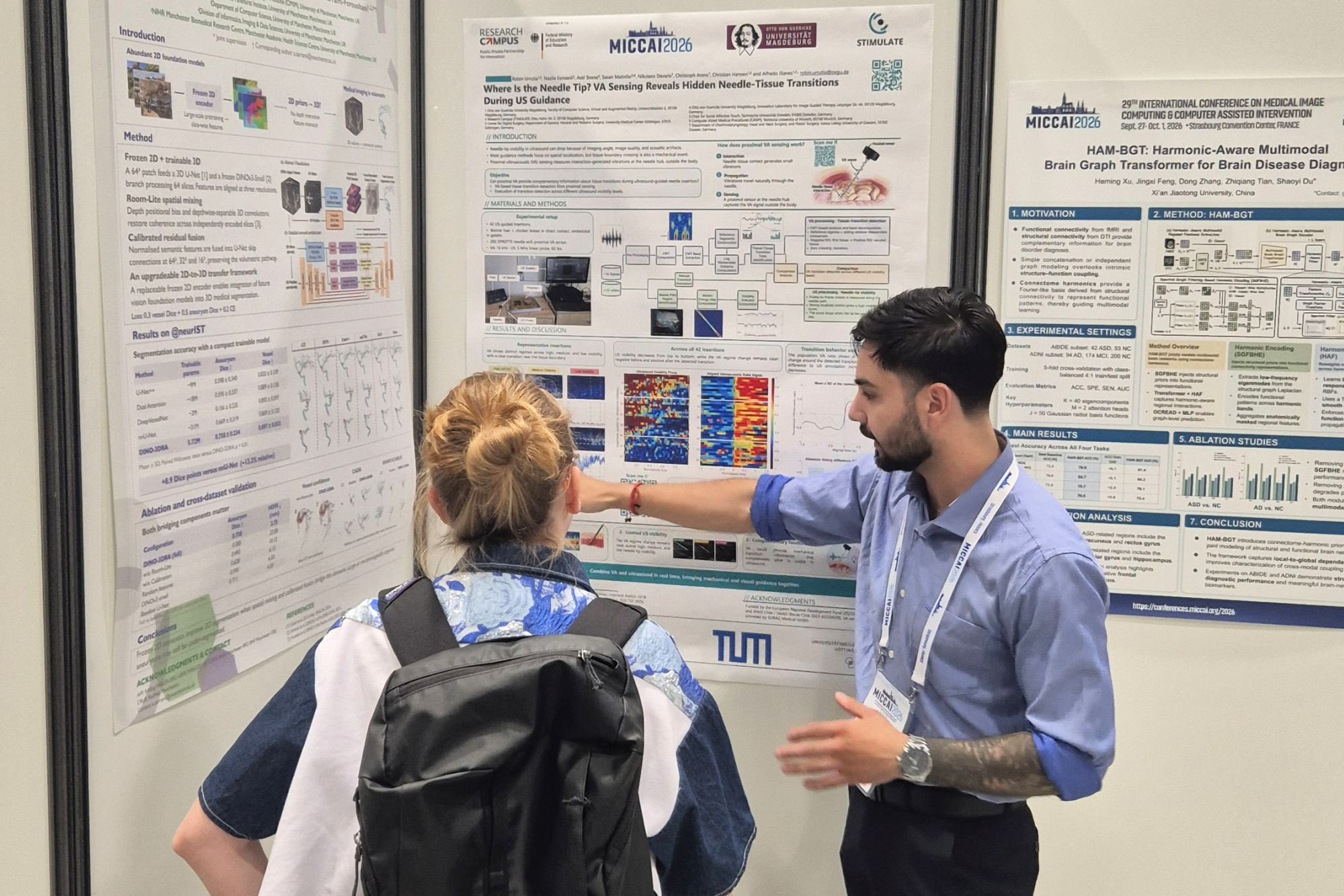
A second paper addressed the question of how vibroacoustic sensors can be used for needle navigation under ultrasound guidance. “Where Is the Needle Tip? Vibroacoustic Sensing Reveals Hidden Needle-Tissue Transitions During Ultrasound Guidance” was authored by Robin Urrutia as first author. The paper thus demonstrates a further approach to how sensor-based methods and intelligent data analysis can support the precision and safety of image-guided interventions.
The presentations at MICCAI offered researchers the opportunity to showcase their findings on an international stage, engage in dialogue with experts from academia and clinical practice, and initiate new collaborations.
Contributions and publications:
- Presentation of FOMO2026 results. Mohammad Rezapourian, Eric Einspänner.
- When Tissue Speaks: Vibroacoustic Monitoring of Tissue Response during Electrosurgery. N. Esmaeili, R. Urrutia, D. Espejo, A. Boese, P. Horvath, C. Hansen, J. Hagenah, A. Illanes.
- Where Is the Needle Tip? Vibroacoustic Sensing Reveals Hidden Needle-Tissue Transitions During Ultrasound Guidance. R. Urrutia, N. Esmaeili, S. Matinfar, A. Boese, N. Davaris, C. Arens, C. Hansen, A. Illanes.
STIMULATE mit mehreren Beiträgen auf der MICCAI 2026
Der Forschungscampus STIMULATE war auf der renommierten MICCAI 2026 – International Conference on Medical Image Computing and Computer Assisted Intervention - mit mehreren wissenschaftlichen Beiträgen vertreten. Die international bedeutende Konferenz bringt Forschende aus den Bereichen medizinische Bildgebung, künstliche Intelligenz, Computer Vision und computergestützte Interventionen zusammen und bietet eine wichtige Plattform, um neue Methoden und Technologien für die Medizin vorzustellen und mit einem internationalen Fachpublikum zu diskutieren.
Die Beiträge aus dem STIMULATE-Umfeld zeigten dabei die thematische Breite der Forschung am Campus – von KI-gestützter medizinischer Bildanalyse über die Unterstützung minimal-invasiver Eingriffe bis hin zu vibroakustischen Verfahren.
Besonders erfolgreich war die Teilnahme von Mohammad Rezapourian und Eric Einspänner an der FOMO26 Challenge (Foundation Model Challenge for Brain MRI). Mit ihrem Team „BrainAI“ erreichten sie den zweiten Platz. Die Challenge untersuchte die Leistungsfähigkeit von Foundation Models für die Analyse von Gehirn-MRT-Daten und bewertete die Modelle anhand von sieben klinisch relevanten Aufgaben. Die drei bestplatzierten Teams wurden eingeladen, ihre Ergebnisse auf der MICCAI zu präsentieren.
Im Rahmen der Konferenz präsentierten Rezapourian und Einspänner daher den Vortrag „Presentation of FOMO2026 results“. Die Arbeiten erfolgten innerhalb der STIMULATE-Forschungsgruppe Clinical AI in Medical Imaging.
Darüber hinaus war die Virtual and Augmented Reality Gruppe des Forschungscampus STIMULATE mit zwei weiteren MICCAI-Beiträgen vertreten. Im Mittelpunkt stand dabei die Nutzung von Vibroakustik und maschinellem Lernen für die Unterstützung minimal-invasiver Eingriffe. Der Beitrag „When Tissue Speaks: Vibroacoustic Monitoring of Tissue Response during Electrosurgery“ untersuchte, wie akustische beziehungsweise vibroakustische Signale genutzt werden können, um die Reaktion von Gewebe während elektrochirurgischer Eingriffe zu erfassen. Erstautorin war Nazila Esmaeili.
Ein zweiter Beitrag widmete sich der Frage, wie vibroakustische Sensorik bei der Nadel-Navigation unter Ultraschall eingesetzt werden kann. „Where Is the Needle Tip? Vibroacoustic Sensing Reveals Hidden Needle-Tissue Transitions During Ultrasound Guidance“ wurde von Robin Urrutia als Erstautor verfasst. Die Arbeit zeigt damit einen weiteren Ansatz, wie sensorbasierte Verfahren und intelligente Datenanalyse die Präzision und Sicherheit bildgestützter Interventionen unterstützen können.
Die Präsentationen auf der MICCAI boten den Forschenden die Möglichkeit, ihre Ergebnisse international sichtbar zu machen, mit Expertinnen und Experten aus Wissenschaft und Klinik in den Austausch zu treten und neue Kooperationen anzustoßen.
Beiträge und Publikationen:
- Presentation of FOMO2026 results. Mohammad Rezapourian, Eric Einspänner.
- When Tissue Speaks: Vibroacoustic Monitoring of Tissue Response during Electrosurgery. N. Esmaeili, R. Urrutia, D. Espejo, A. Boese, P. Horvath, C. Hansen, J. Hagenah, A. Illanes.
- Where Is the Needle Tip? Vibroacoustic Sensing Reveals Hidden Needle-Tissue Transitions During Ultrasound Guidance. R. Urrutia, N. Esmaeili, S. Matinfar, A. Boese, N. Davaris, C. Arens, C. Hansen, A. Illanes.