NEWS
TransferRaum transPORT: successful panel review
Magdeburg as a model region: The transPORT initiative, located at the Research Campus STIMULATE and in Magdeburg’s Science Harbour, has successfully passed the crucial interim review by the Federal Ministry of Research, Technology and Space (BMFTR). This clears the way for the second funding phase: until 2029, the pioneering project will receive further funding of up to 6 million euros to establish the Magdeburg Science Harbour as an international centre for medical technology and an innovative living environment.
From the laboratory straight to the patient’s bedside – where cranes once lifted heavy loads, digital twins for the operating theatre and start-ups specialising in cutting-edge medical technology are now emerging. The aim of the transPORT TransferHAFEN is to radically shorten the long journey from a scientific discovery to its application in patients. “We see ourselves as a learning system,” explains Prof. Georg Rose, Head of the Chair of Medical Technology and the Research Campus STIMULATE. “We are trying out new ways of collaborating, learning from mistakes and creating structures that will endure in Magdeburg beyond the project.”
A vibrant harbour: a focus on workspaces - The various workspaces in and around the Research Campus at Wissenschaftshafen demonstrate that transPORT is more than just a theoretical concept:
- Economy and Jobs – transFORM: A high-tech ecosystem is taking shape here. In the first three years, the first spin-offs have already been launched and the network has been expanded to include numerous partners from the regional business community. The aim is to secure the long-term international visibility of this established medical technology hub.
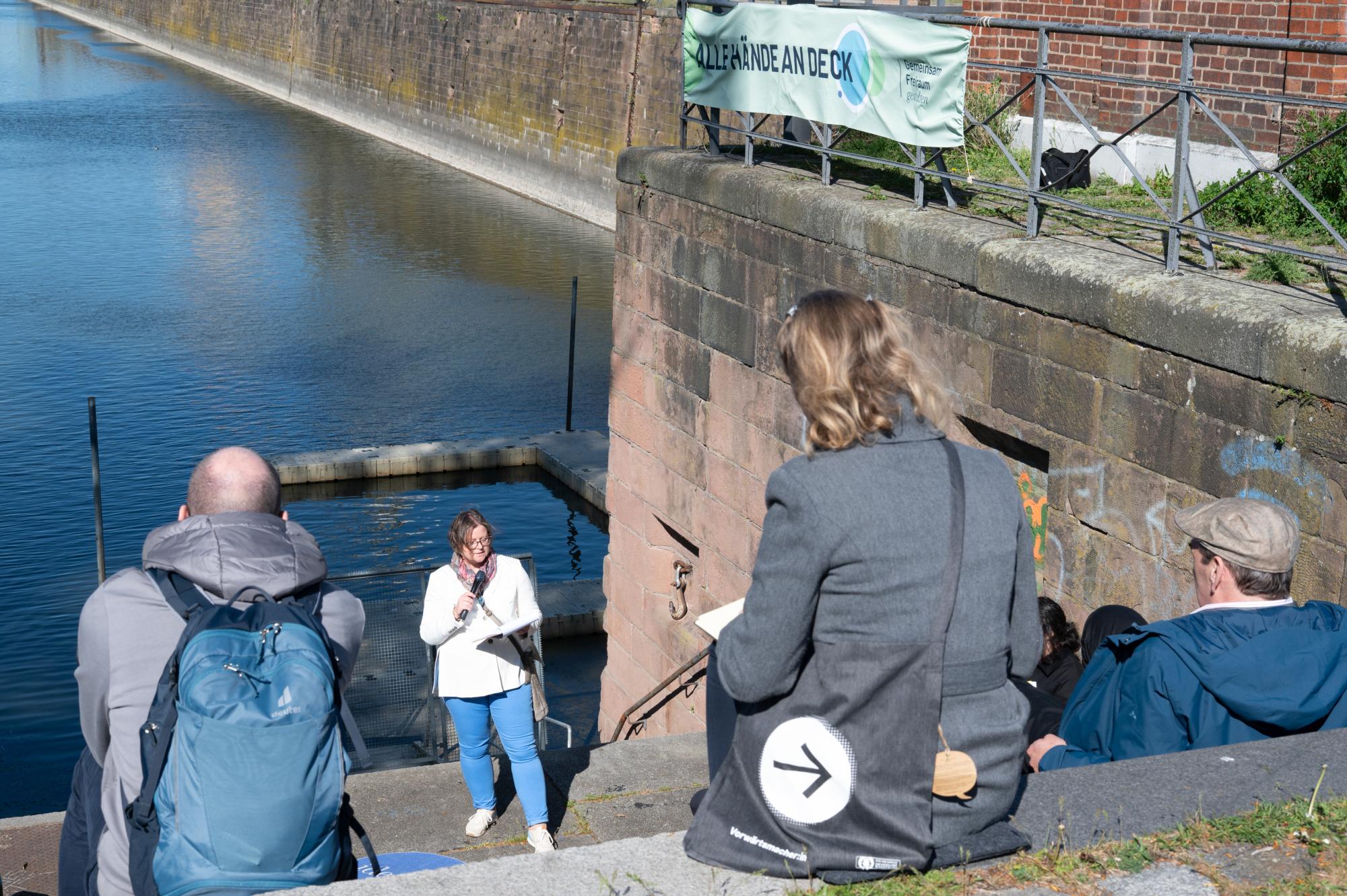
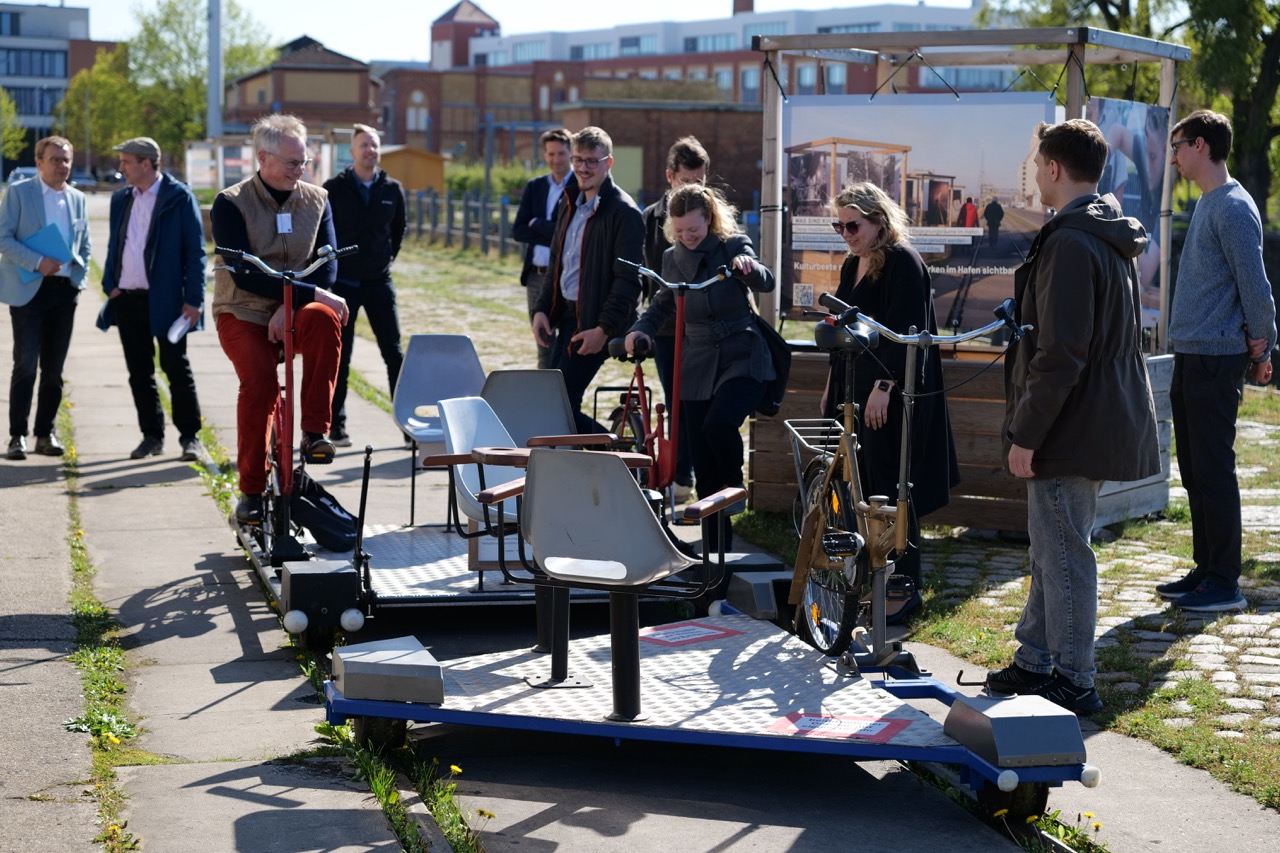
- Culture and Encounter – transSCAPE: At transPORT, science is not a closed system. Through initiatives such as the Tomorrow Labs Festival, which will take place on 6 June 2026 at the Wissenschaftshafen, the Kulturbeete (cultural plots) as a temporary open-air gallery, and the knowledge trail along the harbour basin, research becomes tangible for the public and local residents. Hands-on science right by the River Elbe.
- Technology and Innovation – transTECH: By bringing together science and industry, Magdeburg’s Wissenschaftshafen is becoming a hub for medical technology innovation. This is where groundbreaking solutions are developed, such as the compact MRI system from industry partner Neoscan Solutions: it was designed specifically for young children and can be installed directly in neonatal wards. This spares the youngest patients the stress of being transported to the radiology department. This expertise is complemented by the start-up Raydiax, founded at the Science Harbour, which develops innovative systems for precision medicine in minimally invasive cancer treatments. Together, they are thus identifying unique selling points in medical technology and presenting them to the world.
Measurable successes of structural change: The results of the first phase are impressive: in addition to successfully securing millions in additional external funding, new forms of collaboration have been established that integrate business and academia more closely than ever before. transPORT is thus a key driver of structural change in Saxony-Anhalt.
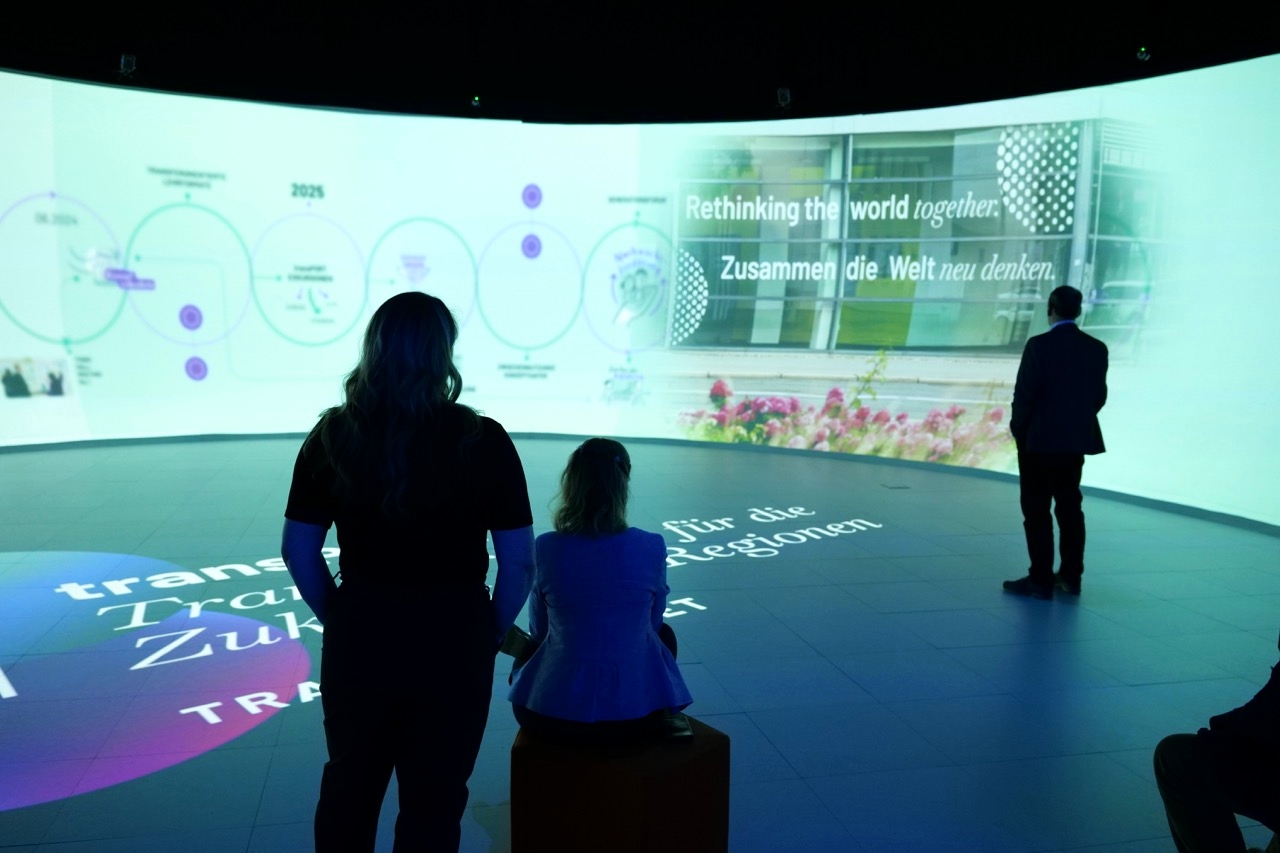
A glimpse into the future: digital and immersive. “In the second funding phase, which has now been approved and runs until 2029, the focus will be on the digitalisation of transfer processes,” explains Prof. Georg Rose. “Plans include immersive formats – that is, virtual insights into medical technology – to convey progress even more vividly.” The transPORT joint project is thus set to become a model for the whole of Germany, demonstrating how regions can shape their own future through bold innovation hubs.

TransferRaum transPORT: erfolgreiche Gremium-Begutachtung
Magdeburg als Modellregion: Die am Forschungscampus STIMULATE und im Magdeburger Wissenschaftshafen angesiedelte TransferRaum-Initiative transPORT hat die entscheidende Zwischenbegutachtung durch das Bundesministerium für Forschung, Technologie und Raumfahrt (BMFTR) erfolgreich bestanden. Damit ist der Weg frei für die zweite Förderphase: Bis 2029 erhält das wegweisende Projekt weitere Fördermittel in Höhe von bis zu 6 Millionen Euro, um den Wissenschaftshafen Magdeburg als internationales Zentrum für Medizintechnik und innovativen Lebensraum zu etablieren.
Vom Labor direkt ans Patientenbett - Wo früher Kräne schwere Lasten hoben, entstehen heute digitale Zwillinge für den OP-Saal und Start-ups für modernste Medizintechnik. Das Ziel des TransferHAFENs transPORT ist es, den weiten Weg von einer wissenschaftlichen Entdeckung bis zur Anwendung am Patienten radikal zu verkürzen. „Wir verstehen uns als lernendes System“, erklärt Prof. Georg Rose, Leiter des Lehrstuhls für Medizintechnik sowie des Forschungscampus STIMULATE. „Wir probieren neue Wege der Zusammenarbeit aus, lernen aus Fehlern und schaffen Strukturen, die über das Projekt hinaus in Magdeburg Bestand haben.“
Ein Hafen, der lebt: Werkstätten im Fokus - Dass transPORT mehr als nur ein theoretisches Konzept ist, zeigen die verschiedenen Werkstätten im und um den Forschungscampus am Wissenschaftshafen:
- Wirtschaft und Jobs – transFORM: Hier wächst ein Hightech-Ökosystem. In den ersten drei Jahren wurden bereits erste Ausgründungen initiiert und das Netzwerk um zahlreiche Partner aus der regionalen Wirtschaft erweitert. Ziel ist es, die internationale Sichtbarkeit des etablierten Medizintechnik-Standorts nachhaltig zu sichern.
- Kultur und Begegnung – transSCAPE: Wissenschaft ist bei transPORT kein geschlossenes System. In Formaten wie dem Tomorrow Labs Festival, welches am 6. Juni 2026 am Wissenschaftshafen stattfindet, Kulturbeeten als wechselnde Freiraumgalerie und dem Wissensparcours am Hafenbecken entlang, wird Forschung für Menschen und Anwohner greifbar. Wissenschaft zum Anfassen direkt an der Elbe.
- Technik und Innovation – transTECH: Durch die Verzahnung von Wissenschaft und Wirtschaft wird der Magdeburger Wissenschaftshafen zum Zentrum für Medizintechnik-Innovationen. Hier entstehen wegweisende Lösungen wie das kompakte MRT-System des Industriepartners Neoscan Solutions: Es wurde speziell für Kleinkinder entwickelt und kann direkt auf Neugeborenenstationen installiert werden. Dies erspart den kleinsten Patienten belastende Transporte in die Radiologie. Ergänzt wird diese Expertise durch das am Wissenschaftshafen gegründete Start-up Raydiax, das innovative Systeme für die Präzisionsmedizin bei minimal-invasiven Krebsbehandlungen entwickelt. Gemeinsam werden so medizintechnische Alleinstellungsmerkmale herausgearbeitet und weltweit präsentiert.
Messbare Erfolge des Strukturwandels: Die Bilanz der ersten Phase kann sich sehen lassen: Neben der erfolgreichen Einwerbung zusätzlicher Drittmittel in Millionenhöhe konnten neue Kooperationsformate etabliert werden, die Wirtschaft und Wissenschaft so eng wie nie zuvor verzahnen. transPORT ist damit ein zentraler Motor für den Strukturwandel in Sachsen-Anhalt.
Blick in die Zukunft: Digital und immersiv. „In der nun bewilligten zweiten Förderphase bis 2029 wird der Fokus auf der Digitalisierung der Transferprozesse liegen“, beschreibt Prof. Georg Rose. „Geplant sind unter anderem immersive Formate, also virtuelle Einblicke in die Medizintechnik, um den Fortschritt noch anschaulicher zu vermitteln.“ Das Verbundvorhaben transPORT soll so zu einem Modell für ganz Deutschland werden, wie Regionen durch mutige Innovationsräume ihre Zukunft selbst gestalten.