NEWS
Research stay by Tonia Mielke at the University of Toronto
From 8 September to 12 December 2025, Tonia Mielke, a researcher at the Research Campus STIMULATE and member of the Virtual & Augmented Reality Group at Otto von Guericke University Magdeburg, spent three months as a visiting graduate student at the University of Toronto. During her stay, she was a guest at the Continuum Robotics Lab, which is headed by Prof. Dr. Jessica Burgner-Kahrs.
The Continuum Robotics Lab focuses on the development and control of continuum robots, which are snake-like robotic systems that bend continuously along their length. Thanks to their flexible mobility, they can navigate through narrow and curved environments and perform novel tasks in medicine and industry.
During her research stay, Tonia Mielke worked on a project in the field of human-robot interaction for the teleoperation of continuum robots. Since controlling these robotic systems requires not only positioning but also control of their entire shape, the project investigated control concepts and feedback approaches to enable intuitive and effective operation. These concepts were evaluated in a user study, the results of which are currently being prepared for publication.
The research stay was funded by the European Regional Development Fund (ERDF) and aimed to strengthen STIMULATE's international network.
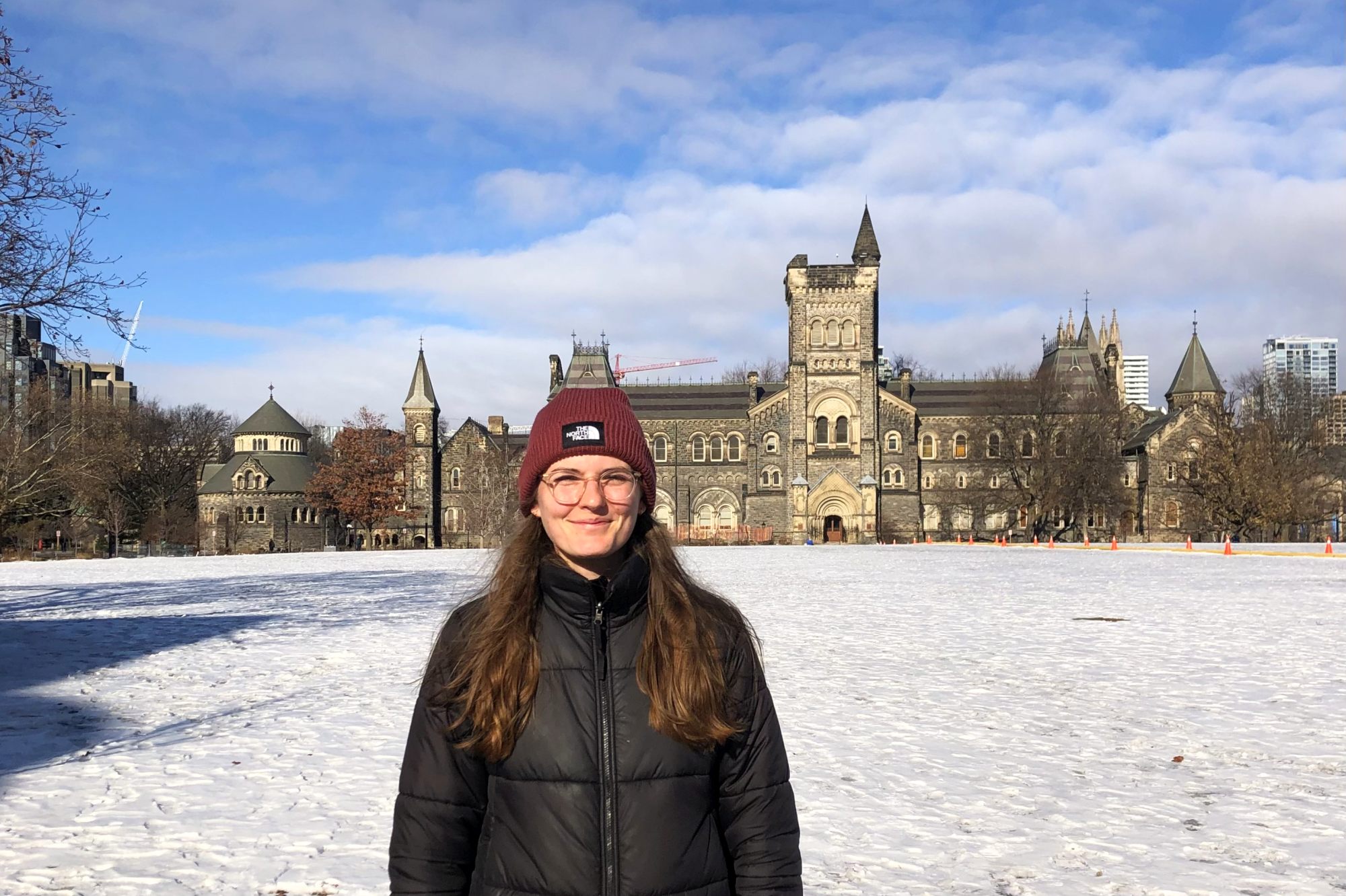
Forschungsaufenthalt von Tonia Mielke an der University of Toronto
Vom 8. September bis zum 12. Dezember 2025 verbrachte Tonia Mielke, Wissenschaftlerin am Forschungscampus STIMULATE und Mitglied der Virtual & Augmented Reality Group der Otto-von-Guericke-Universität Magdeburg, drei Monate als Visiting Graduate Student an der University of Toronto. Während ihres Aufenthalts war sie zu Gast im Continuum Robotics Lab, das von Prof. Dr. Jessica Burgner-Kahrs geleitet wird.
Das Continuum Robotics Lab beschäftigt sich mit der Entwicklung und Steuerung von Kontinuumsrobotern; dabei handelt es sich um schlangenähnliche Robotersysteme, die sich kontinuierlich entlang ihrer Länge biegen. Dank ihrer flexiblen Beweglichkeit können sie durch enge und gekrümmte Umgebungen navigieren und können neuartige Aufgaben in der Medizin und der Industrie übernehmen.
Während ihres Forschungsaufenthalts arbeitete Tonia Mielke an einem Projekt im Bereich der Mensch-Roboter-Interaktion zur Teleoperation von Kontinuumsrobotern. Da die Steuerung dieser Robotersysteme nicht nur die Positionierung, sondern auch die Kontrolle ihrer gesamten Form erfordert, untersuchte das Projekt Steuerungskonzepte und Feedback-Ansätze, um eine intuitive und effektive Bedienung zu ermöglichen. Diese Konzepte wurden anhand einer Nutzerstudie evaluiert, dessen Ergebnisse derzeit für eine Publikation vorbereitet werden.
Der Forschungsaufenthalt wurde durch den Europäischer Fonds für regionale Entwicklung (EFRE) gefördert und hatte das Ziel, das internationale Netzwerk von STIMULATE zu stärken.