NEWS
Successful completion of funding phase 2 at the Research Campus STIMULATE
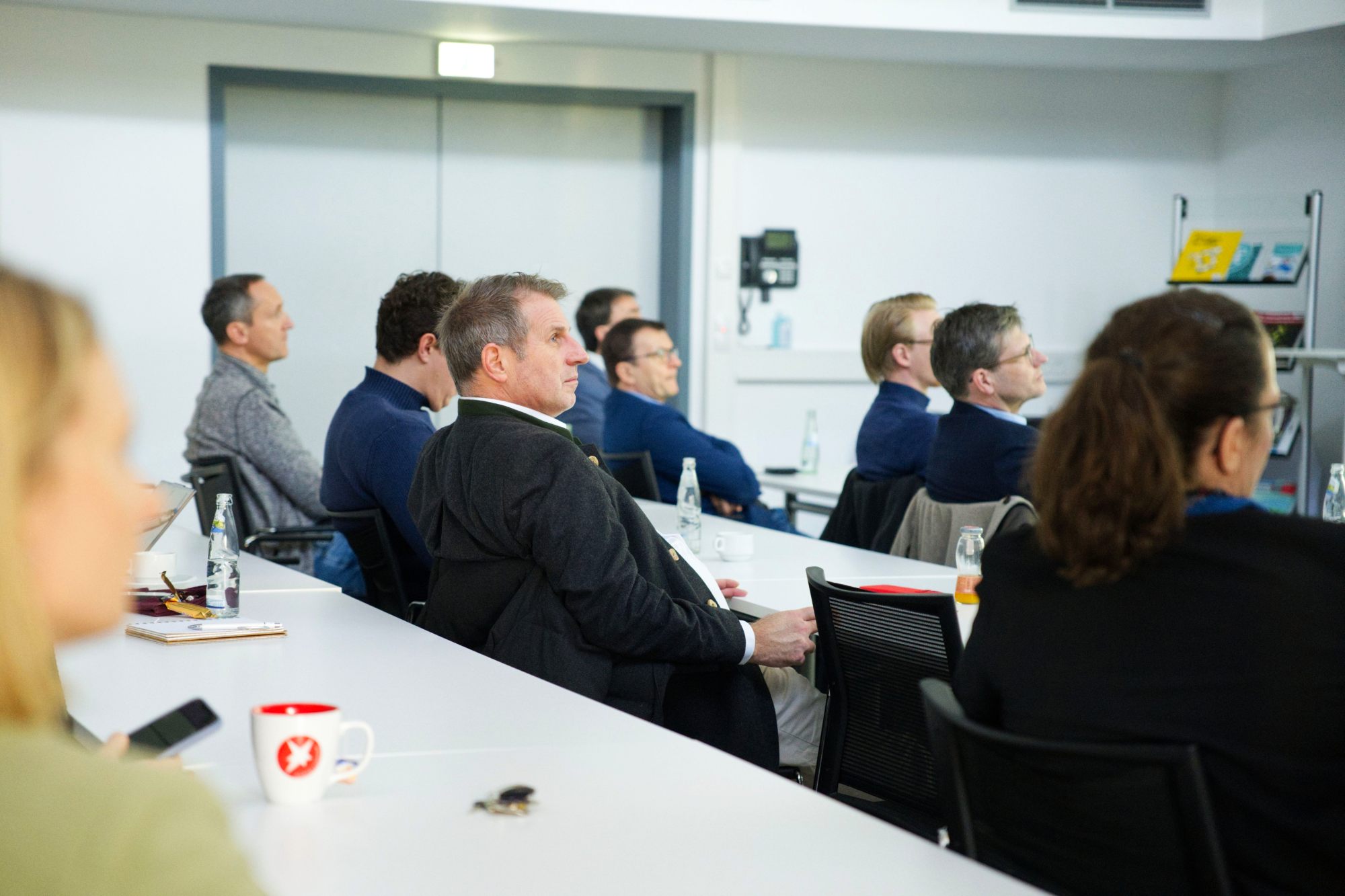
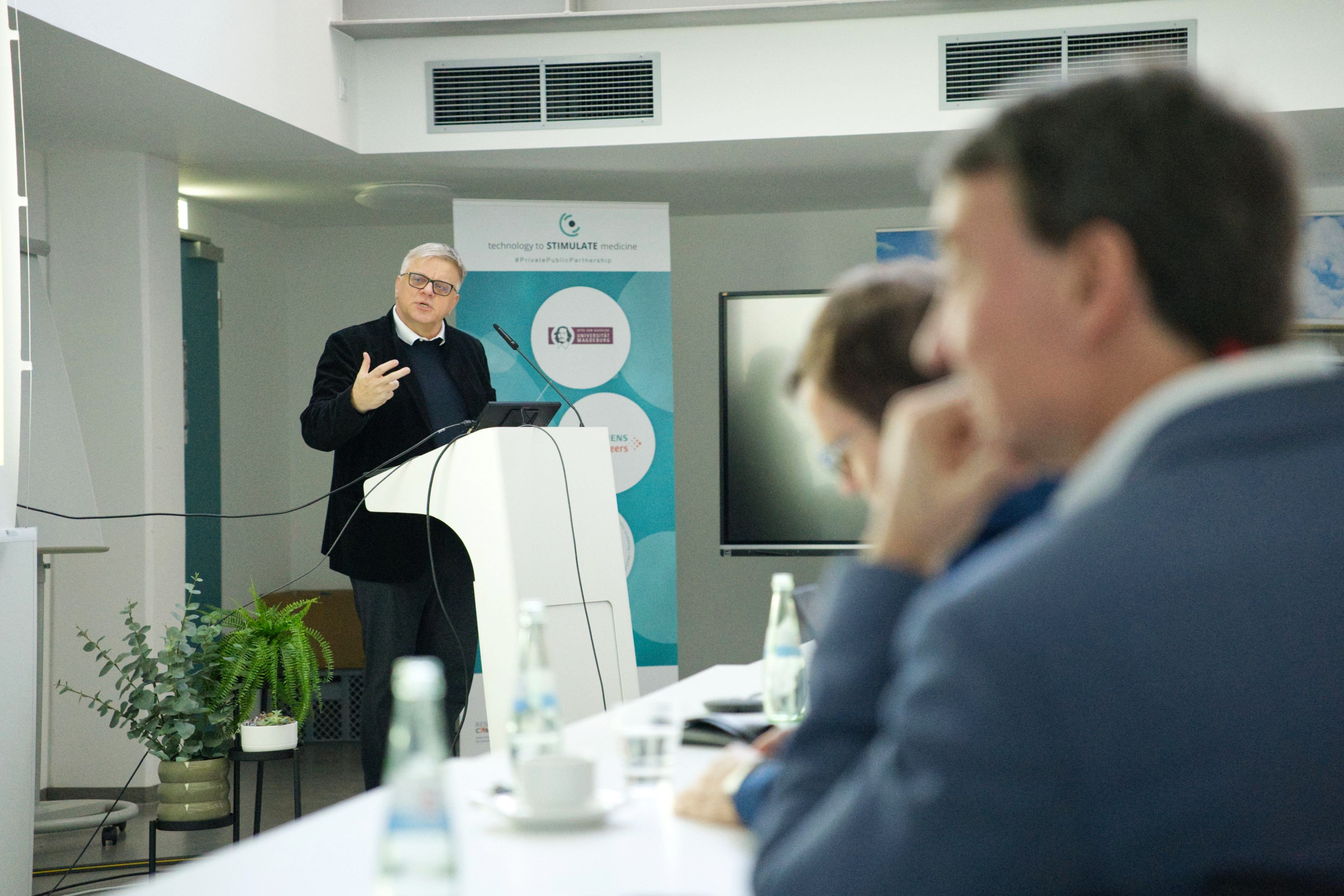
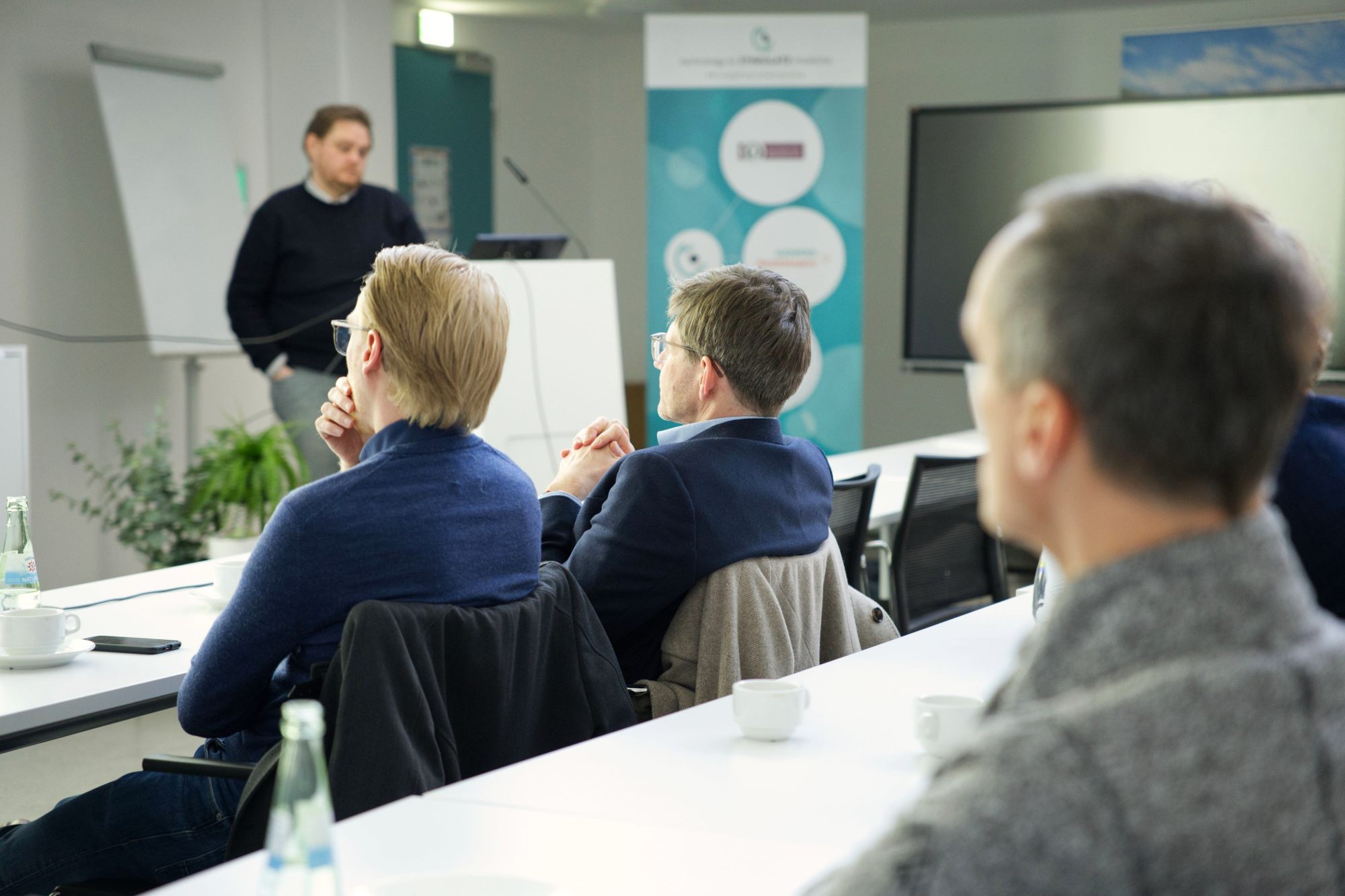
On 20 January 2026, the Research Campus STIMULATE hosted the successful conclusion of the second funding phase of the project sponsored by the Federal Ministry of Education and Research/Federal Ministry of Research, Technology and Space with academic and industrial partners. The event provided a comprehensive overview of the scientific progress achieved during the funding phase.
The closing meeting was attended by representatives from Otto von Guericke University Magdeburg, including Magdeburg University Hospital, as well as numerous partners from science and industry, including Siemens Healthineers AG, IGEA s.p.a., NORAS MRI products GmbH, Neoscan Solutions GmbH, the Fraunhofer Institute for Factory Operation and Automation IFF, Hannover Medical School (MHH), CAScination AG, ITP GmbH, USE-Ing. GmbH and RWTH Aachen University.
The focus was on four key and cross-cutting topics: iMRI Solutions, iCT Solutions, Immunoprofiling and Computational Medicine. Current research findings were presented and discussed in depth in these areas. The presentations were complemented by demonstrations of innovative technologies and software solutions that illustrated STIMULATE's translational approach.
The Research Campus STIMULATE aims to further develop minimally invasive image-guided therapies for oncological, neurovascular and cardiovascular diseases so that they can be used efficiently, gently on patients and in the long term in routine clinical practice. Against the backdrop of demographic change and the increasing significance of age-related diseases, this research topic is of particular social and medical relevance.
The second funding phase focused in particular on the further development of minimally invasive, image-guided tumour therapies with the aim of achieving the most complete and curative treatment possible (known as A0 ablation). The focus was on the precise planning, safe implementation and immediate monitoring of ablative therapies using magnetic resonance imaging (MRI) and computed tomography (CT).
The main theme of iMRI Solutions involved research into new methods for interventional MRI. These include robust three-dimensional temperature measurement (thermometry) in moving organs, new interaction and operating concepts for physicians, and innovative monitoring methods (e.g. using fibre-optic pressure measurement) during the procedure. In addition, standardised usability tests were established to better adapt image-guided therapies to clinical workflows. Non-thermal ablation procedures also expanded the therapeutic spectrum of iMRI.
The main theme, iCT Solutions, focused on the development of CT imaging specially optimised for interventions. The aim was to make image guidance during minimally invasive procedures more intuitive, safer and less radiation-intensive. To this end, research was conducted into automated image tracking, markerless instrument tracking and robotics- and ultrasound-assisted navigation methods, among other things. A particular focus was placed on the question of how the success of tumour ablation can be reliably assessed during the procedure – for example, through AI-supported evaluation of image data or new ultrasound procedures.
In the field of Immunoprofiling, the focus was on the biological effects of therapies. Researchers investigated how local tumour changes and systemic immune responses are related and how this information can be used to optimise therapies on an individual basis. A key element was the development of a preclinical biophantom that realistically replicates patient conditions and opens up new possibilities for investigating immunological effects – particularly in connection with irreversible electroporation.
The cross-cutting topic of Computational Medicine combined imaging and biological findings in an intelligent software environment. With the help of artificial intelligence, methods were developed to assess tumour vitality, plan optimal ablation zones and predict tissue changes. The aim is to provide comprehensive, image-based navigation and decision support for doctors throughout the entire procedure.
The innovation strategy of the Research Campus STIMULATE enables the economic exploitation of the developed technologies by industrial partners and spin-offs, thus making an important contribution to regional value creation in a structurally weak region.
STIMULATE would like to express its sincere thanks to all participating partners, funding bodies and contributors for their commitment, trustful cooperation and joint scientific successes.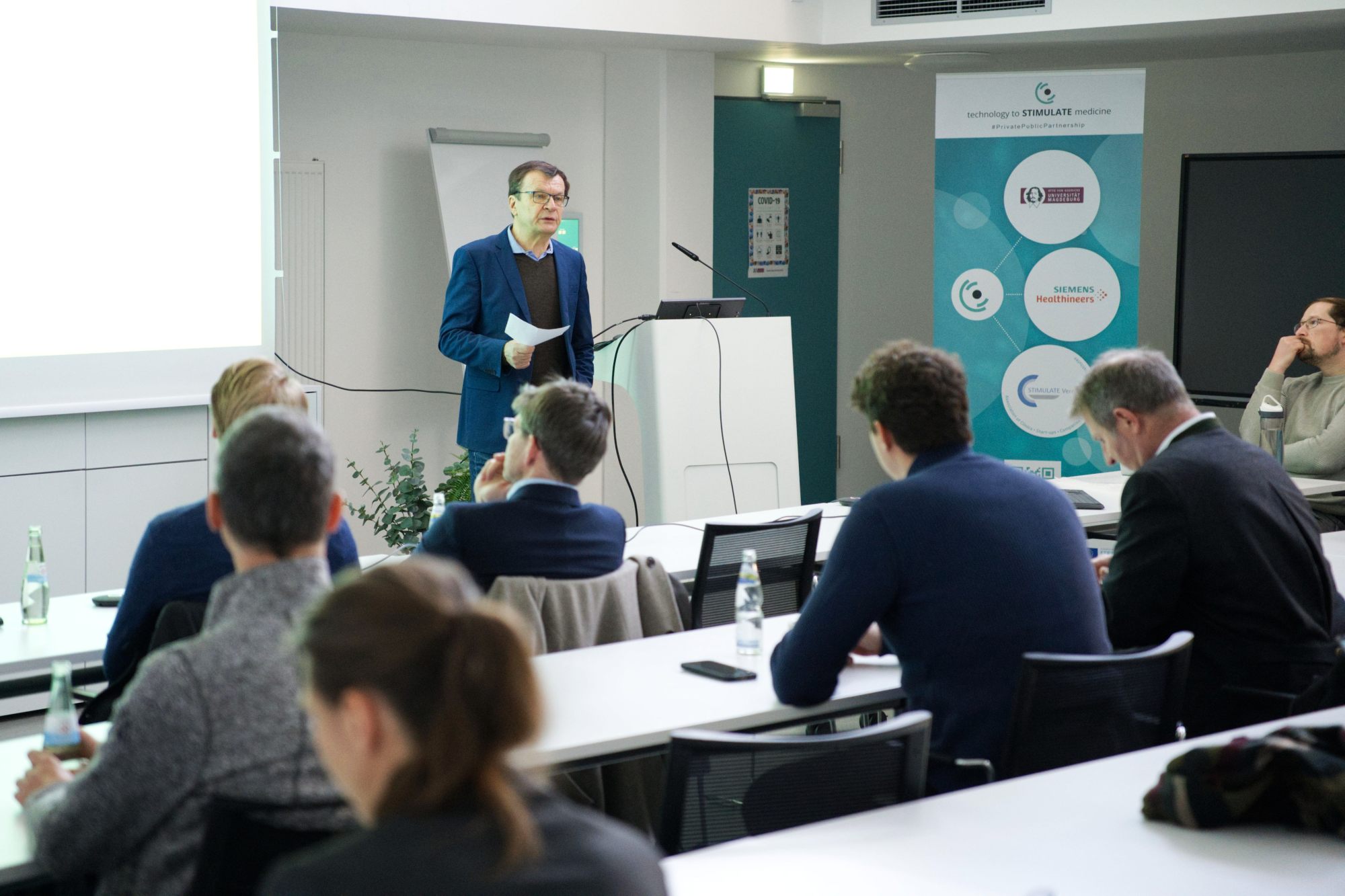
Erfolgreicher Abschluss der Förderphase 2 am Forschungscampus STIMULATE
Am Forschungscampus STIMULATE fand am 20.01.2026 mit akademischen und industriellen Partnern der erfolgreiche Abschluss der zweiten Förderphase des vom Bundesministerium für Bildung und Forschung bzw. Bundesministerium für Forschung, Technologie und Raumfahrt geförderten Vorhabens statt. Die Veranstaltung bot einen umfassenden Überblick über die in der Förderphase erzielten wissenschaftlichen Fortschritte.
An dem Abschlussmeeting nahmen Vertretende der Otto-von-Guericke-Universität Magdeburg inklusive des Universitätsklinikums Magdeburg sowie zahlreicher Partner aus Wissenschaft und Industrie teil, darunter Siemens Healthineers AG, IGEA s.p.a., NORAS MRI products GmbH, Neoscan Solutions GmbH, das Fraunhofer-Institut für Fabrikbetrieb und -automatisierung IFF, die Medizinische Hochschule Hannover (MHH), CAScination AG, ITP GmbH, USE-Ing. GmbH und die RWTH Aachen.
Im Mittelpunkt standen die vier Leit- und Querschnittsthemen iMRI Solutions, iCT Solutions, Immunoprofiling und Computational Medicine. In diesen Themenfeldern wurden aktuelle Forschungsergebnisse vorgestellt und intensiv diskutiert. Ergänzt wurden die Präsentationen durch Demonstrationen innovativer Technologien und Softwarelösungen, die den translationalen Anspruch von STIMULATE verdeutlichten.
Der Forschungscampus STIMULATE verfolgt das Ziel, minimal-invasive bildgeführte Therapien für onkologische, neurovaskuläre und kardiovaskuläre Erkrankungen so weiterzuentwickeln, so dass sie effizient, patientenschonend und langfristig in der klinischen Routine einsetzbar sind. Vor dem Hintergrund der demografischen Entwicklung und der zunehmenden Bedeutung altersassoziierter Erkrankungen besitzt dieses Forschungsthema eine besonders hohe gesellschaftliche und medizinische Relevanz.
Gegenstand der zweiten Förderphase war insbesondere die Weiterentwicklung minimal-invasiver, bildgeführter Tumortherapien mit dem Ziel einer möglichst vollständigen und kurativen Behandlung (sogenannte A0-Ablation). Der Fokus lag auf der präzisen Planung, sicheren Durchführung und unmittelbaren Überwachung ablativer Therapien unter Nutzung der Magnetresonanztomographie (MRT) und der Computertomographie (CT).
Im Leitthema iMRI Solutions wurden neue Methoden für die interventionelle MRT erforscht. Dazu zählen unter anderem eine robuste dreidimensionale Temperaturmessung (Thermometrie) in bewegten Organen, neue Interaktions- und Bedienkonzepte für Ärzt:innen sowie innovative Monitoringverfahren (z.B. mittels faseroptischer Druckmessung) während des Eingriffs. Ergänzend wurden standardisierte Usability-Tests etabliert, um bildgeführte Therapien besser an klinische Arbeitsabläufe anzupassen. Auch nicht-thermische Ablationsverfahren erweiterten das therapeutische Spektrum der iMRI.
Das Leitthema iCT Solutions widmete sich der Entwicklung einer speziell für Interventionen optimierten CT-Bildgebung. Ziel war es, die Bildführung während minimal-invasiver Eingriffe intuitiver, sicherer und strahlungsärmer zu gestalten. Dazu wurden unter anderem automatisierte Bildnachführungen, markerlose Instrumententrackings sowie robotik- und ultraschallgestützte Navigationsverfahren erforscht. Ein besonderer Schwerpunkt lag auf der Frage, wie sich der Erfolg einer Tumorablation bereits während des Eingriffs zuverlässig beurteilen lässt – beispielsweise durch KI-gestützte Auswertung von Bilddaten oder neue Ultraschallverfahren.
Im Bereich Immunoprofiling stand die biologische Wirkung der Therapien im Fokus. Untersucht wurde, wie lokale Tumorveränderungen und systemische Immunreaktionen zusammenhängen und wie diese Informationen genutzt werden können, um Therapien individuell zu optimieren. Ein zentrales Element war die Entwicklung eines präklinischen Biophantoms, das patientennahe Bedingungen realistisch abbildet und neue Möglichkeiten zur Untersuchung immunologischer Effekte eröffnet – insbesondere im Zusammenhang mit der irreversiblen Elektroporation.
Das Querschnittsthema Computational Medicine verband die bildgebenden und biologischen Erkenntnisse in einer intelligenten Softwareumgebung. Mithilfe künstlicher Intelligenz wurden Verfahren zur Einschätzung der Tumorvitalität, zur Planung optimaler Ablationszonen sowie zur Vorhersage von Gewebeveränderungen entwickelt. Ziel ist eine umfassende, bildbasierte Navigations- und Entscheidungsunterstützung für Ärztinnen und Ärzte während des gesamten Eingriffs.
Die Innovationsstrategie des Forschungscampus STIMULATE ermöglicht im Anschluss eine wirtschaftliche Verwertung der entwickelten Technologien durch industrielle Partner sowie Ausgründungen und leistet damit einen wichtigen Beitrag zur regionalen Wertschöpfung in einer strukturschwachen Region.
STIMULATE bedankt sich herzlich bei allen beteiligten Verbundpartnern, Fördermittelgebern und Mitwirkenden für das Engagement, die vertrauensvolle Zusammenarbeit und die gemeinsamen wissenschaftlichen Erfolge.